
Every move is surveyed before it is booked.
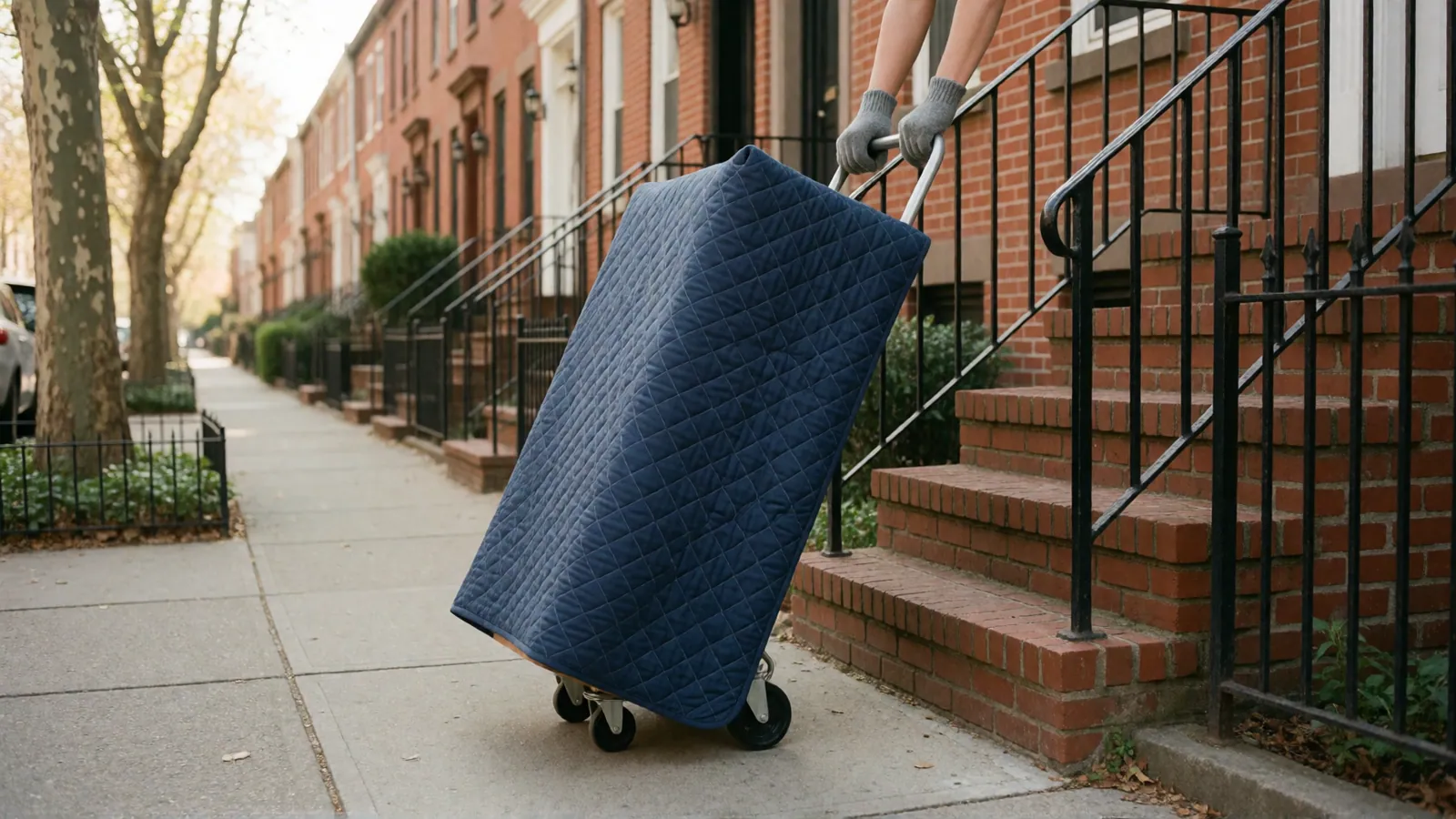
A mover's gloved hands, the forearms bare, steering a four-wheel dolly with a tall piece wrapped in a quilted navy moving blanket along a sidewalk past the brick stoops and iron railings of a row of Queens row houses.

Moves

A move inside the city, charged by the quarter hour

Queens to anywhere in the city or Nassau, charged by the quarter hour at the rate on this site, with the travel time as its own line.

  • $150 to $260 an hour, no sales tax
  • Quarter hours from the truck's arrival
  • One end in Queens

AI-generated illustration. Not a real person, home or business.

Where the clock starts, and where it stops

On a local move you pay for time, so it matters exactly which time.

The clock starts when the truck pulls up at the first address, and it stops when the last piece is set down in its room at the other end. The drive from one address to the other is inside that time, because it is part of the move: the load is on the truck, and the crew is with it.

The drive out from Woodside to your door, and the drive home from the last address, are never timed. Each is a fixed allowance, set by where the address is and charged at the crew's rate, so a slow morning on the expressway changes nothing on your bill, and neither does an empty road.

The time is counted from the moment the truck arrives at the start of the move to the moment the last piece is in at the end, in quarter hours: part of a quarter hour counts as a whole one. There is no minimum number of hours.

Two fixed allowances, at the hourly rate. Travel time is a fixed allowance, not a stopwatch: one allowance for the drive from Woodside to the start of the move and one for the drive back from the end of it, each set by where the address is, and charged at the crew's hourly rate. The drive between the two addresses is part of the move's own time.

One allowance from Woodside to the start of the move and one back from its end, each set by where that address is and charged at the crew's hourly rate. Travel time carries no sales tax.
Where the address isThe allowance, each wayAt two movers' rateAt three movers' rateAt four movers' rate
Woodside or a neighborhood next to itfifteen minutes$37.50$51.25$65.00
Elsewhere in Queensthirty minutes$75.00$102.50$130.00
Brooklynthirty minutes$75.00$102.50$130.00
Manhattanthirty minutes$75.00$102.50$130.00
The Bronxforty-five minutes$112.50$153.75$195.00
Staten Islandan hour$150.00$205.00$260.00
Nassau Countyforty-five minutes$112.50$153.75$195.00

What the hours are spent on

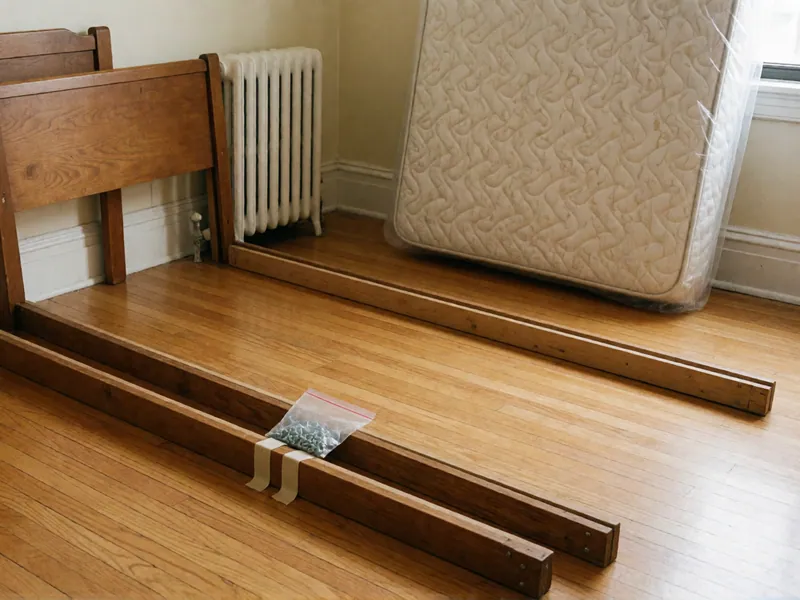
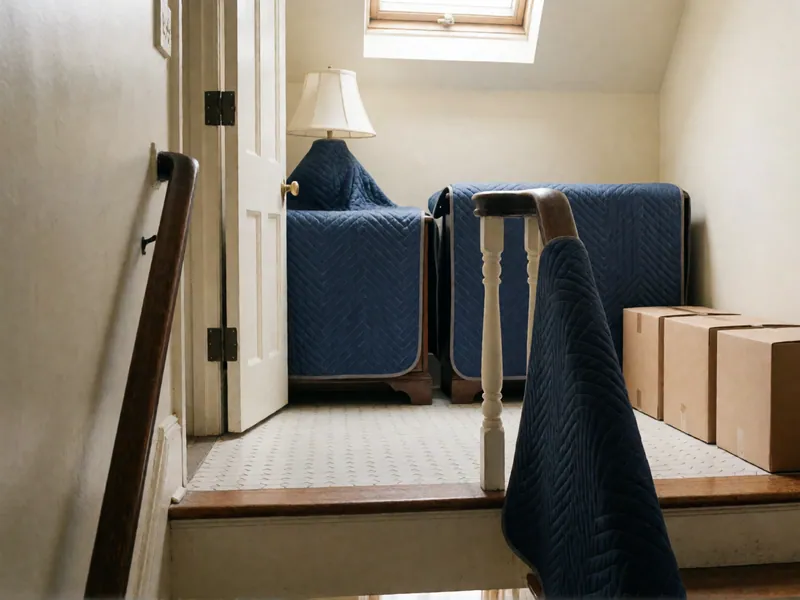
Most of a local move is not driving. It is the walk through with the crew lead, runners on the floors and pads on the door frames before the first piece moves, the furniture wrapped in blankets and held with stretch wrap, the beds and tables taken apart, and the load built on the truck so that nothing shifts on a turn.

The load goes on heaviest first, against the front wall of the box, and is built up in tiers, each one strapped, so the weight rides low and forward. Boxes fill the tiers, which is why the crew asks for every box taped shut: a box with its flaps folded under cannot carry another on top of it, and an open box is carried on its own.

At the other end the order runs backwards. The runners and pads go down again, every piece goes to the room you name, and the beds and tables are put back together. You check that the truck is empty, write anything wrong on the receipt, and sign.

  • One end of every move is in Queens.
  • The same hourly rate on every day a move runs.

The rate includes the truck, the moving blankets, the floor runners and door-frame pads, the dollies, the straps and the stretch wrap that holds the blankets on. Tape and paper used to protect a piece of furniture are never a separate charge.

Time, not fees. There is no fee per flight of stairs, no fee for a long walk to the truck, no fuel surcharge and no charge for tolls on a route we choose. Stairs and a long walk take time, and the time is what you pay for; the move planner adds it to the hours.

Why the planner says a range, and what moves it

Two one-bedroom moves on the same street can take very different days. One has a reserved elevator, boxes stacked by the door and a truck at the curb; the other has a busy passenger elevator, a kitchen still on the shelves and a truck round the corner. The move planner asks the questions that separate the two: the home, how full it is, the stairs or the elevator at each end, how far the truck can stop from the door, who packs and what comes apart.

It turns the answers into a crew, a truck and a range of hours at the published rate, and prints both ends of the range at the same size, because either end can happen.

What the answers can miss. What moves a range on the day: more furniture than the answers said, boxes not packed when the truck arrives, an elevator that is busy or not reserved, a truck that can't stop near the door, stairs nobody mentioned, and furniture that has to come apart that nobody planned for.

The survey is where a range is replaced by a written estimate, and it looks where answers forget to: the closets, the cabinets over the refrigerator, the basement or the storage cage, and the hall the sofa has to turn in.

Three plain kraft boxes stacked largest to smallest, each sealed with tan tape, in the corner of an empty room beside a white-trimmed window.AI-generated illustration. Not a real home or business.

Priya Ramaswamy-Hale

Surveys by video

Runs the video surveys and writes the estimates that follow a video survey.

Priya asks you to open every closet on the call, because closets are where moves run long.

Priya counts boxes from the shelves, a shelf at a time.

The picture is a still of the work, not a portrait.
The rates, and one worked example

One hourly rate for each size of crew, the truck included.

The same rate on every day a move runs, the truck included, billed in quarter hours from the truck's arrival. Moving, packing, unpacking, taking furniture apart and the travel time carry no sales tax.
The crewAn hourA quarter hourUsually moves
Two movers and a truck$150$37.50A studio or one bedroom
Three movers and a truck$205$51.25Two bedrooms
Four movers and a truck$260$65.00Three bedrooms or four bedrooms or a house

No weekend price, no evening price, no end-of-the-month price and no summer price. Moves are busiest at the end and the start of a month and on Saturdays, so those days fill first, but they cost the same.

A worked example: a planning range

A studio, elevator to elevator From Sunnyside to Jackson Heights

A studio, about average · start: an elevator building · end: an elevator building · packed by you · a few pieces taken apart

  • Crewfor this home and these stairsTwo movers
  • Trucknamed by its length16-foot box truck
  • Hours on the jobbilled in quarter hours3 to 4½ hours
  • Travel time, both waysone allowance each waythirty minutes
  • Hourly rateevery day a move runs$150 an hour
  • The time, at the ratethe hours and the travel; no sales tax$525.00 to $750.00
  • Putting furniture back togetherits own line, at the same rate$112.50 to $150.00
  • Sales tax on that line8.875%, New York City$9.98 to $13.31
  • Boxes, counted on the daynot in the range: charged by the box15 to 25 boxes
  • The rangea planning range, not an estimate$647.48 to $913.31

The move planner's answer to these questions, at the published rates. A planning range is not an estimate or a quote.

Plan your own move

Related services

Plan your move

Try the move planner: a crew, a truck and a range of hours at the published rate, in about two minutes. Sending it to us books nothing.