How it works
What a move day looks like, from the knock to the signature
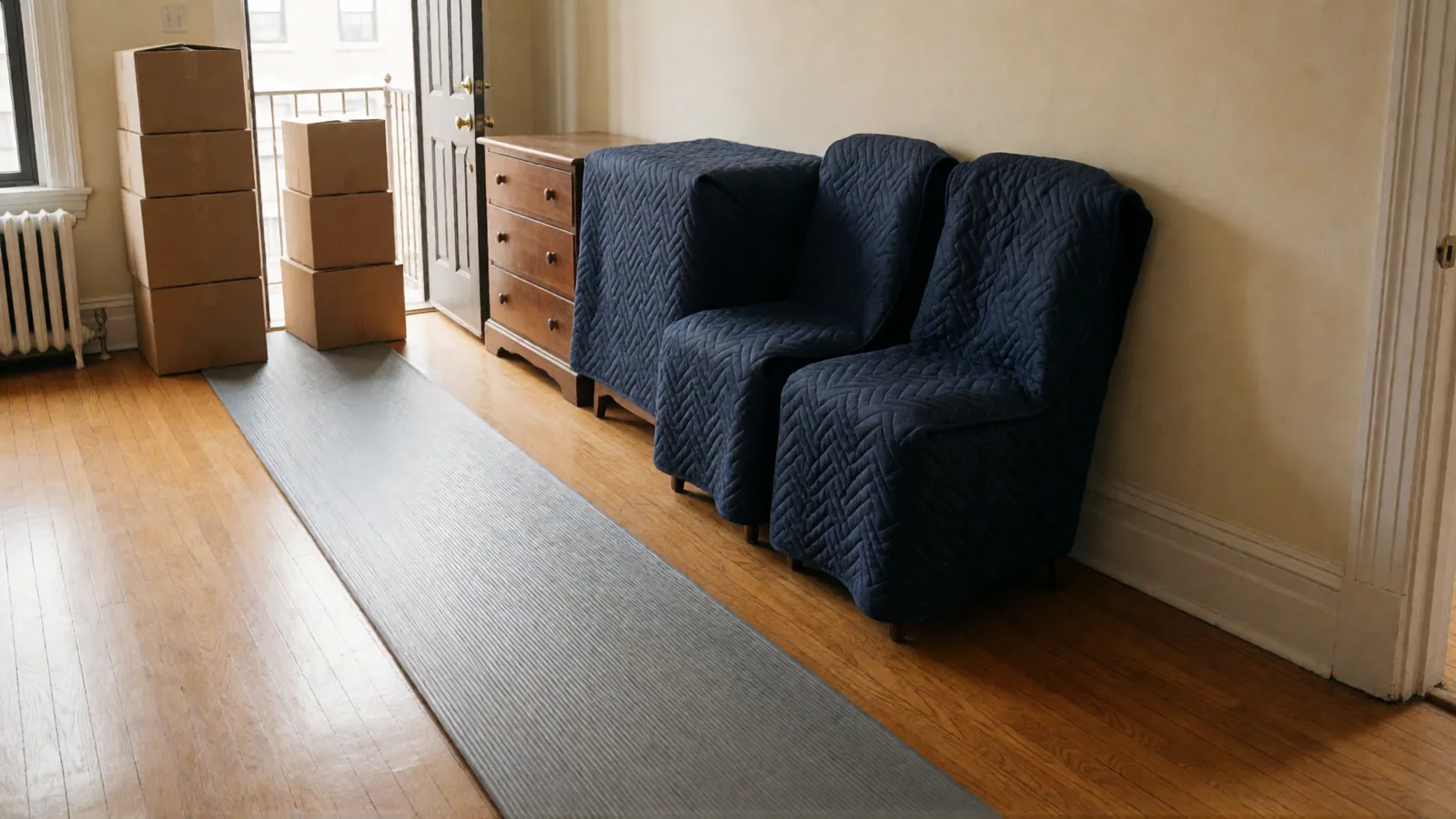
The order a crew works in, and why: the walk-through first, the floors before the furniture, the heaviest pieces first onto the truck.
AI-generated illustration. Not a real home or business.
The day in nine steps
The order is the same for a studio and a house, because each step makes the next one shorter.
Before the day
The office has sent the building its certificate and booked the elevator, and you have the order for service and the State's booklet. Boxes are packed, or the packers are booked.
The truck arrives
The crew lead knocks, the time starts, and you initial the start time on the bill of lading.
A walk through with the crew lead
Every room, every closet, what comes apart, what is fragile, what stays. Anything already scratched is noted before it is touched.
Floors and doors protected
Runners on the floors and the hall, pads on the door frames, the banister wrapped on a walk-up, and the elevator padded where the building asks.
Wrapped and taken apart
Furniture in blankets held with stretch wrap; mattresses bagged; beds and tables taken apart, their hardware bagged and taped to the piece it came from.
Loaded
The heaviest pieces first, then the load built tier by tier and strapped. A last walk through every room and closet before the doors close.
The drive
On the truck routes, which keep a truck off the parkways. The drive between the two addresses is part of the move's time.
Unloaded and put back together
Floors and doors protected again, every piece into the room you name, and the beds and tables put back together.
Checked and signed
You check the truck is empty and write any damage on the delivery receipt before you sign it. Then you pay from the bill of lading.
Why it goes in this order
The walk-through comes first because a crew lead who has opened every closet plans the load before the first piece moves, and because anything already scratched is written down before anyone touches it. That settles, in the old home, a question nobody wants to argue about in the new one.
Bartholomew Nwosu-Strand, who leads the walk-up crews in Astoria, Sunnyside and Ridgewood, wraps the banister before he wraps the furniture. A corner that catches the rail on a turn then marks a blanket rather than the paint. The runners go down before the first box for the same reason: every trip out of the door crosses the same floor.
The heaviest pieces go on first, against the front wall of the truck, and the load is built in tiers from there: dressers and appliances at the bottom, boxes on solid pieces and never the other way round, mattresses standing along the side, and a strap across each tier so nothing shifts when the truck brakes.
Plates travel on edge in a dish pack for the same reason a load is strapped. The truck is a moving floor, and anything lying flat takes every bump on its weakest face.
The last walk through every room and closet takes a minute, and it can spare you a second trip back at the hourly rate.
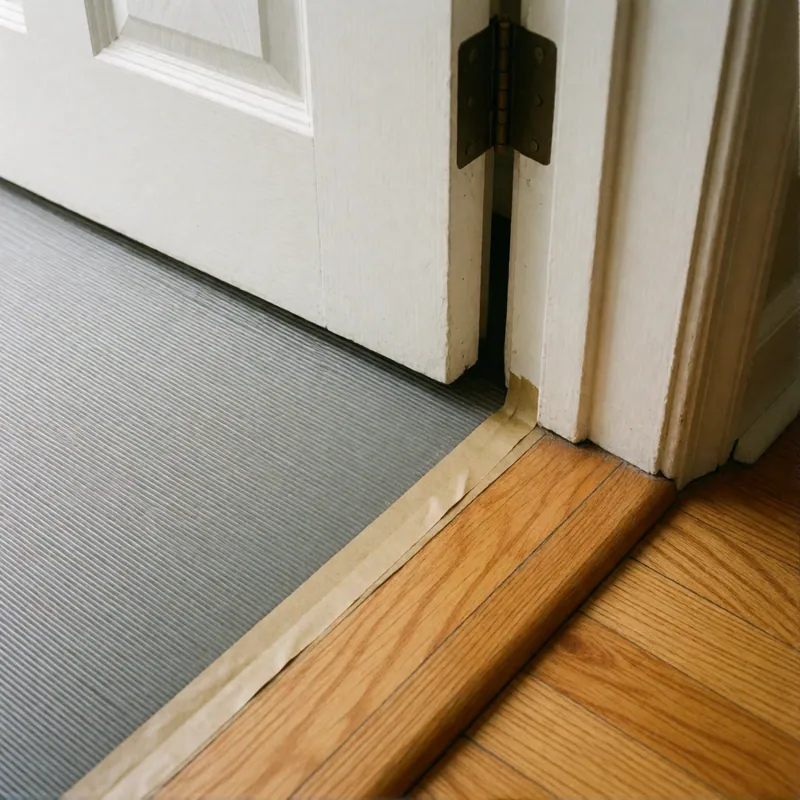 AI-generated illustration. Not a real home or business.
When the crew comes
A crew starts its day at 8 am or at noon, Monday to Saturday. A small move is often the second job of a day, so a noon start is easier to find than an early one.
Monday to Saturday only. No move runs on a Sunday or on a federal holiday: New Year's Day, Martin Luther King Jr. Day, Washington's Birthday, Memorial Day, Juneteenth, Independence Day, Labor Day, Columbus Day, Veterans Day, Thanksgiving or Christmas Day, or the day any of them is observed.
Where the truck stops
We can't reserve the curb. The City lets a truck double-park for twenty minutes at most, while loading, and only when the block has no free space or loading zone, so the crew takes the nearest legal space it can find. A parking ticket is never charged to you.
A crew can make up for a long carry with a dolly and an extra trip; it cannot make up for a truck with nowhere to stop. If the building has a loading dock, or the block a loading zone, say so at the survey: the walk from the truck to the door is time on the clock.
Your part of the day
Five things, and each of them makes the crew's part shorter.
On moving day
Be there when the truck arrives, or have someone there who can answer for you.
Walk through with the crew lead, and point out anything fragile or already damaged.
Keep children and pets in one closed room, or with a friend.
Do a last walk through every room and closet before the doors close.
At the new home, check the truck is empty, and write any damage on the receipt before you sign.
At the end: check, write, sign
Before you sign the delivery receipt, write any damage on it. A note made at the time is the best evidence there is, and signing for a move never gives up a claim: the receipt only says what arrived in apparent good condition.
Plan your move
Try the move planner: a crew, a truck and a range of hours at the published rate, in about two minutes. Sending it to us books nothing.