Every move is surveyed before it is booked.
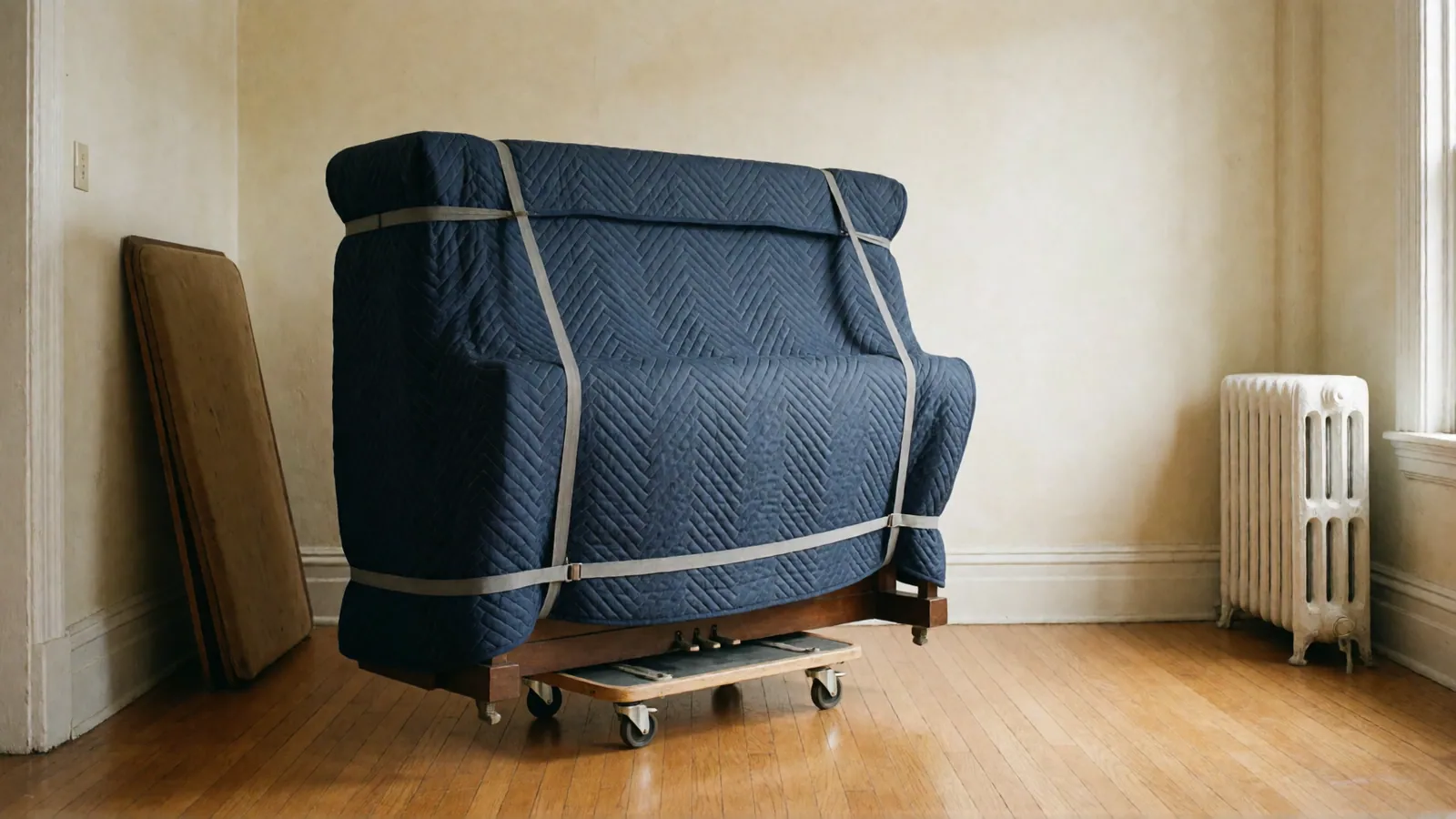
An upright piano wrapped completely in quilted navy moving blankets and gray straps, standing on a four-wheel dolly in an emptied room, a padded piano board leaning on the wall beside it.

Packing, boxes and heavy pieces

An upright on its own board, and four hands on it

Upright pianos, treadmills, marble tops, large televisions and mirrors; a grand piano, or anything over 1,000 pounds, surveyed first.

  • An upright piano, $350 and its time
  • On its own board, strapped
  • A grand piano is surveyed first

AI-generated illustration. Not a real home or business.

How an upright travels

Most of an upright piano's weight is the iron frame inside it, which holds the strings at a tension the wooden case could never hold on its own. That weight sits high and toward the back, so an upright standing on its small casters is a piece that wants to tip, and the casters were made for a few inches across a floor, not for a threshold or a ramp.

The fallboard is closed over the keys, the piano wrapped in blankets, then tipped onto a padded board and strapped to it, so that the piano and the board move as one piece. On the stairs the board takes the edges of the steps instead of the legs; on the truck the piano stands upright against the front wall, strapped. It is never laid on its back.

A piano usually wants tuning once it has settled in its new room. That is a tuner's visit, after the move.

  • An upright is a flat charge plus its time.
  • Nothing is hoisted through a window.

An upright piano is $350 for the board, the straps and the extra hands, plus the time it takes, which the move planner counts. A grand piano is surveyed first and priced on its own, because its legs and lyre come off and it travels on its side on a padded board.

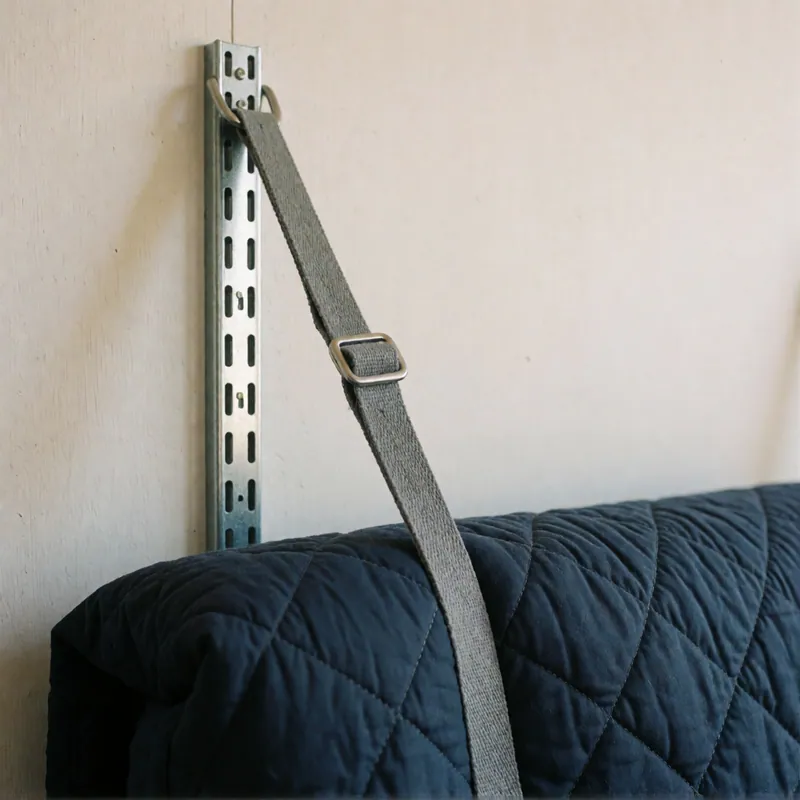
A gray webbing strap with a steel buckle hooked to a slotted steel rail on a pale plywood wall, holding a piece of furniture wrapped in a quilted navy moving blanket.AI-generated illustration. Not a real home or business.

Treadmills, marble, glass and big televisions

The planner asks "Heavy or awkward pieces?" and names them: A treadmill or exercise bike, a large television, a marble or glass tabletop, a sleeper sofa, a big mirror or framed picture. It counts the time each one takes.

  • A marble or glass tabletop

    Travels on its edge, wrapped and padded, never lying flat: flat, a long slab carries its own weight across its middle, and one pothole can snap it.

  • A treadmill or an exercise bike

    Folded and locked where it folds, its deck lowered, and carried by the frame rather than the rails. Whatever unbolts easily, a seat post or a console, comes off first and is bagged with its bolts.

  • A large television

    Travels standing up, never on its face, in its own box if you kept it and otherwise wrapped in blankets with the screen padded. Take it off the wall before the move and tape the bracket's screws to its back.

  • A sleeper sofa

    Heavier than it looks, with a bed folded inside it. The mechanism is tied shut so it cannot open on the stairs.

  • A big mirror or framed picture

    In a picture box, on edge, wrapped, the gaps filled, and loaded standing between two pieces that cannot move.

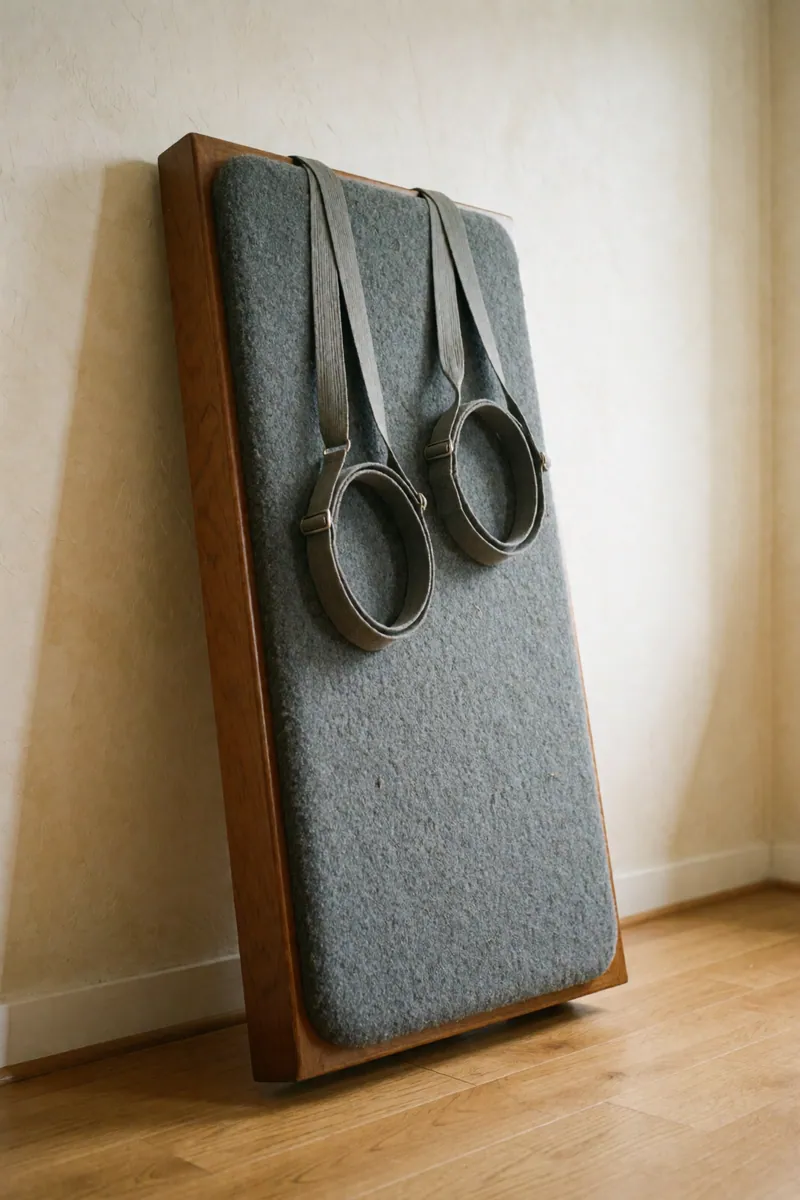
A piano board padded in gray carpet with two gray webbing straps looped on it, leaning against a cream plaster wall on an oak floor.AI-generated illustration. Not a real home or business.

Halvard Moreno-Kwan

Crew lead, pianos and heavy pieces

Leads the crews that move uprights, treadmills and marble tops.

Halvard moves an upright on its own board, strapped, with four hands on it.

Halvard says so at the survey when a piece will not fit the stairs, so there is time to find a rigger.

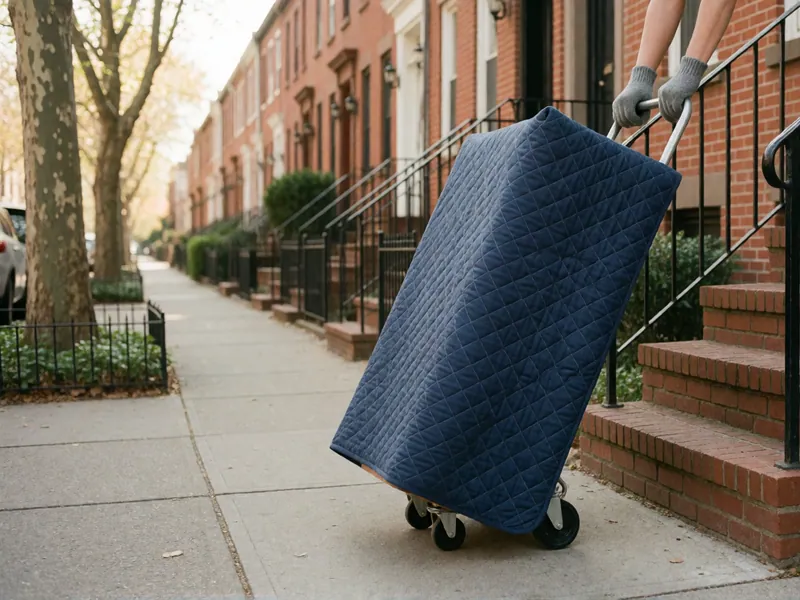
The picture is a still of the work, not a portrait.
What is surveyed and priced on its own

A grand piano is a different piece of work from an upright, and so is anything heavy enough to need more than hands, straps and a board. Neither is in the planner's range; both are seen first.

A single piece of 1,000 pounds or more, like a large safe or a slate pool table, is not covered by the ordinary hourly rates. It is surveyed and priced on its own, or we tell you who moves it.

When a piece fits neither the stairs nor the elevator, lifting it outside the building is rigging, and in New York City that is done by or under a licensed rigger. We don't do it. We tell you before moving day, you hire the rigger, and we carry the piece from the curb.

A worked example: one bedroom with an upright

The piano's handling is its own line; its time is in the hours.

A worked example: a planning range

One bedroom with an upright piano From Woodside to Manhattan

One bedroom, about average · start: a second-floor walk-up · end: an elevator building · packed by you · an upright piano

  • Crewfor this home and these stairsTwo movers
  • Trucknamed by its length16-foot box truck
  • Hours on the jobbilled in quarter hours4½ to 6½ hours
  • Travel time, both waysone allowance each wayforty-five minutes
  • Hourly rateevery day a move runs$150 an hour
  • The time, at the ratethe hours and the travel; no sales tax$787.50 to $1,087.50
  • Upright piano handlingthe board, the straps and the extra hands; no sales tax$350
  • Boxes, counted on the daynot in the range: charged by the box25 to 40 boxes
  • The rangea planning range, not an estimate$1,137.50 to $1,437.50

The move planner's answer to these questions, at the published rates. A planning range is not an estimate or a quote.

Plan a move with a piano

Related services

Plan your move

Try the move planner: a crew, a truck and a range of hours at the published rate, in about two minutes. Sending it to us books nothing.