$150 to $260 an hour, no sales tax
Local moves
Queens to anywhere in the city or Nassau, charged by the quarter hour at the rate on this site, with the travel time as its own line.
Every move is surveyed before it is booked.
37-32 61st Street, Woodside, NY 11377
Packing, boxes and heavy pieces
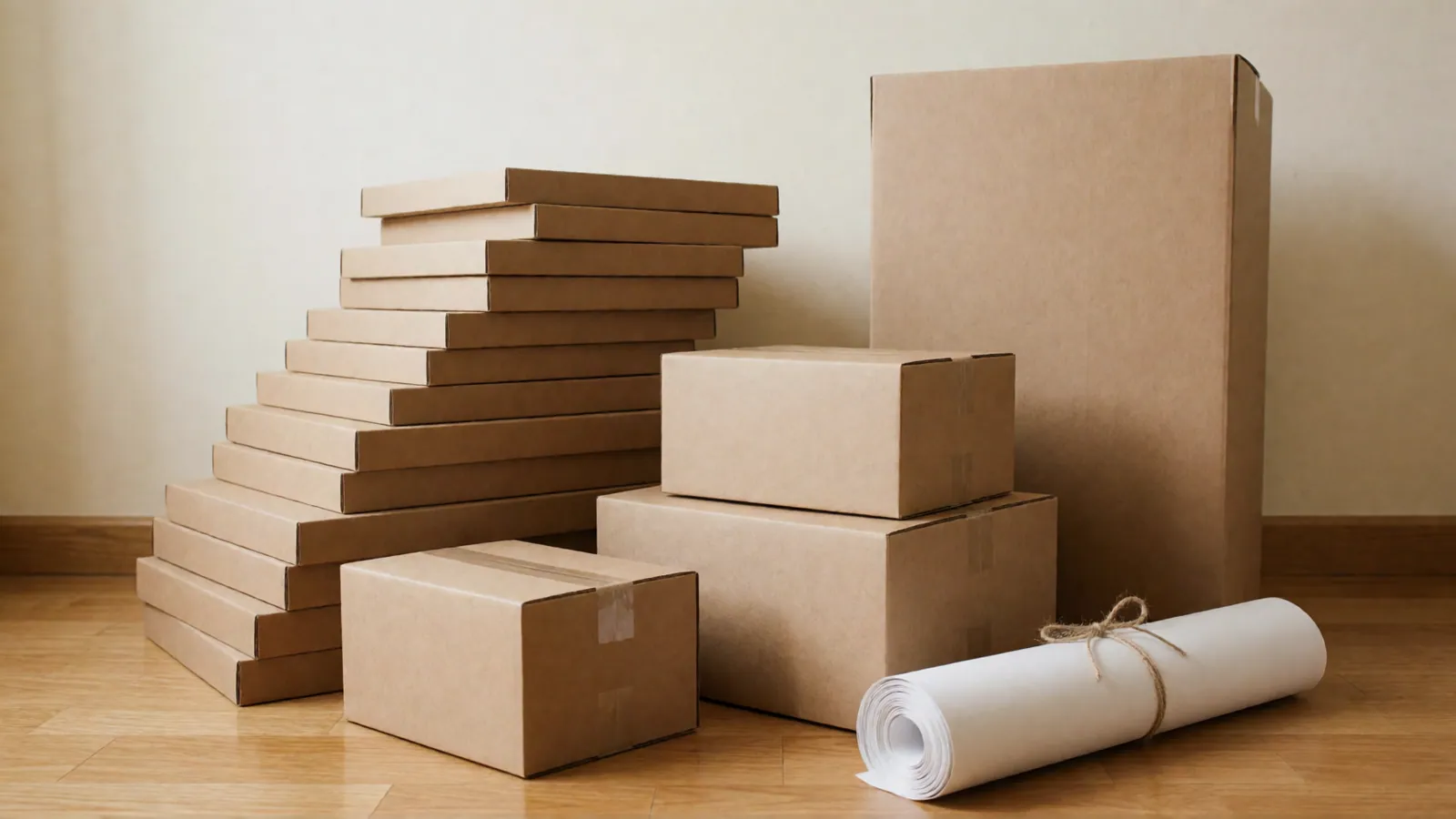
Book boxes to wardrobe boxes, dish packs, mattress bags, tape and paper, each at a printed price, with the sales tax shown.
AI-generated illustration. Not a real home or business.
Plain kraft boxes with no print, and the supplies to close and fill them.
| The item | The price | Sales tax | With the tax |
|---|---|---|---|
| Small box (book box), about 1.5 cubic feet | $3.50 | $0.31 | $3.81 |
| Medium box, about 3 cubic feet | $5 | $0.44 | $5.44 |
| Large box, about 4.5 cubic feet | $6.50 | $0.58 | $7.08 |
| Dish pack, a double-walled box for plates and glasses | $9 | $0.80 | $9.80 |
| Picture and mirror box, adjustable | $15 | $1.33 | $16.33 |
| Wardrobe box with a hanging bar | $18 | $1.60 | $19.60 |
| Mattress bag, queen or king | $12 | $1.07 | $13.07 |
| Packing tape, one roll | $3 | $0.27 | $3.27 |
| Plain packing paper, a 10-pound bundle | $18 | $1.60 | $19.60 |
Boxes you buy from us to pack yourself carry New York City sales tax. Boxes our own packers use are part of the packing and carry no tax line. Either way you pay for the boxes used, at the price on the list.
Moving, packing, unpacking, taking furniture apart and the travel time carry no sales tax. Two things do: boxes and materials you buy from us, at 8.875%, and furniture put back together, at 8.875% in New York City or 8.625% in Nassau County, by where it is done.
For books, files, records, tins and jars: anything heavy for its size. A small box full of books is about as much as one person should carry down a flight of stairs, which is why books go in nothing bigger.
For the pantry, pots and pans, shoes, toys and small appliances. It is the box most of a kitchen goes into, after the plates and the glasses.
For what is bulky and light: pillows, bedding, towels, lampshades and coats. Never books, and never the kitchen: a large box packed heavy bursts at the bottom or hurts the person lifting it.
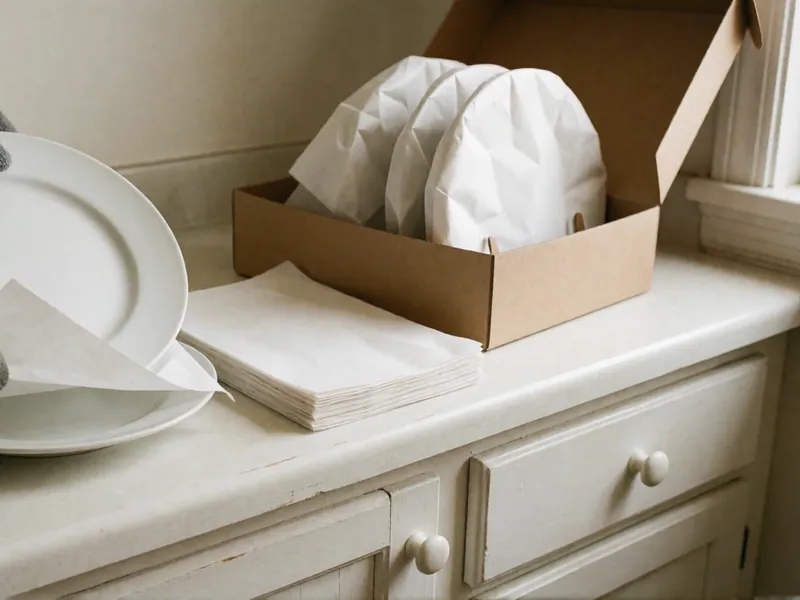
Double walls for plates, bowls and glasses. The plates stand on edge in a row, each wrapped on its own, with the glasses and cups wrapped on a layer above them and the gaps filled with paper.
It slides open or closed to fit a mirror or a framed picture, which travels in it on edge, wrapped, with the gaps filled. Mark the side the glass faces.
A tall box with a bar across the top. Clothes go into it straight from the closet on their hangers and come out at the other end ready to hang, which is why it is packed on the morning of the move and rides on the truck, rather than standing assembled in the hall for a week.
A plastic bag drawn over the mattress and taped shut, so the stairwell, the truck floor and the street never touch it.
Tape every box across the bottom seam and again across the top. A box held shut by folded flaps opens the moment it is lifted by them.
Plain paper, never newspaper: newsprint ink comes off on plates and glasses. Crumpled, it fills the gaps in a box; flat, it wraps each piece.
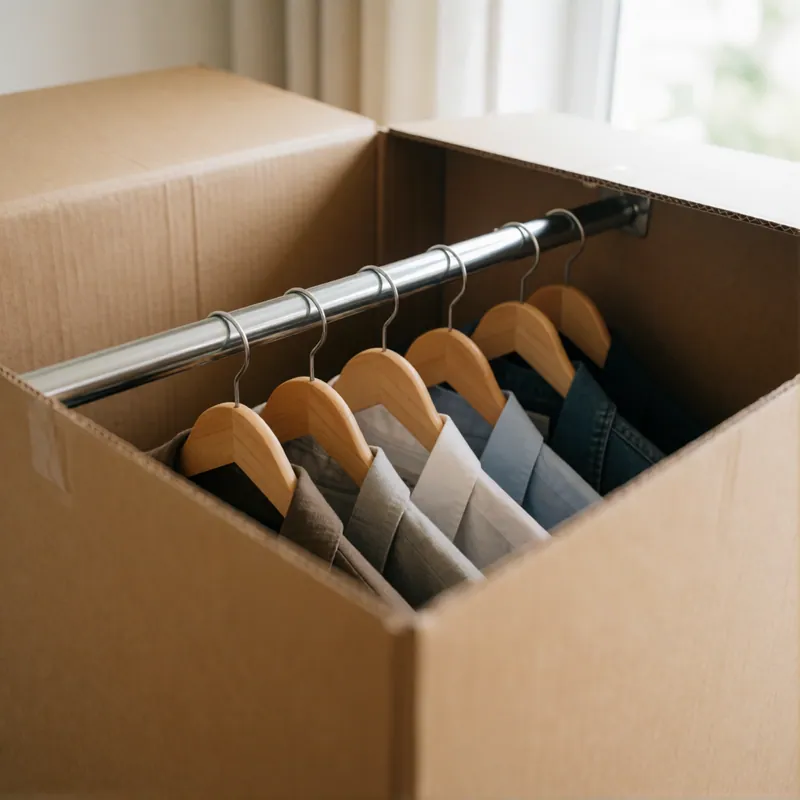 AI-generated illustration. Not a real home or business.
Count shelves and drawers, not rooms.
A room says very little about how many boxes it holds: a bedroom with a bed and a wardrobe fills a few, a bedroom with a bookcase fills many more. Count the shelves, the cabinets and the drawers, a shelf at a time, and keep the closets and the basement for last, because that is where the count runs over.
The table shows the counts the planner starts from for each size of home; the fuller the closets, the higher the count goes. It counts boxes, not their price.
| The home | The usual crew | The usual truck | Boxes, usually |
|---|---|---|---|
| A studio | Two movers | 16-foot box truck | 15 to 25 |
| One bedroom | Two movers | 16-foot box truck | 25 to 40 |
| Two bedrooms | Three movers | 20-foot box truck | 40 to 65 |
| Three bedrooms | Four movers | 26-foot box truck | 60 to 95 |
| Four bedrooms, or a whole house | Four movers | 26-foot box truck | 85 to 130 |
Boxes ride on the truck on moving day, or can be collected from the office on a weekday. Nothing is delivered on its own.
The office is at 37-32 61st Street, Woodside, NY 11377.
$150 to $260 an hour, no sales tax
Queens to anywhere in the city or Nassau, charged by the quarter hour at the rate on this site, with the travel time as its own line.
$150 to $260 an hour, no sales tax
The kitchen and the breakables, or the whole home, charged by the hour at the move's own rate, with the boxes used at the price list.
$150 to $260 an hour, no sales tax
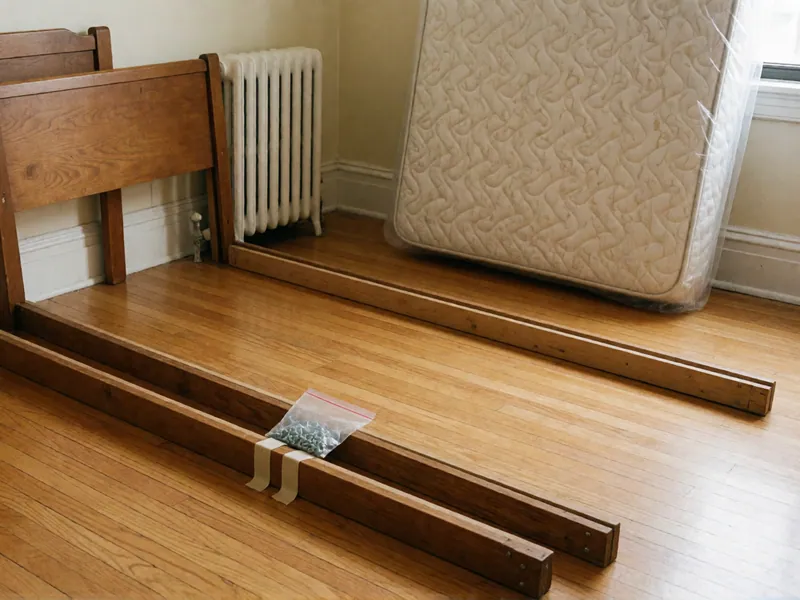
Bed frames, dining tables, wardrobes and desks, their hardware bagged and taped to the piece, and put back together in the new room.
Try the move planner: a crew, a truck and a range of hours at the published rate, in about two minutes. Sending it to us books nothing.