Every move is surveyed before it is booked.
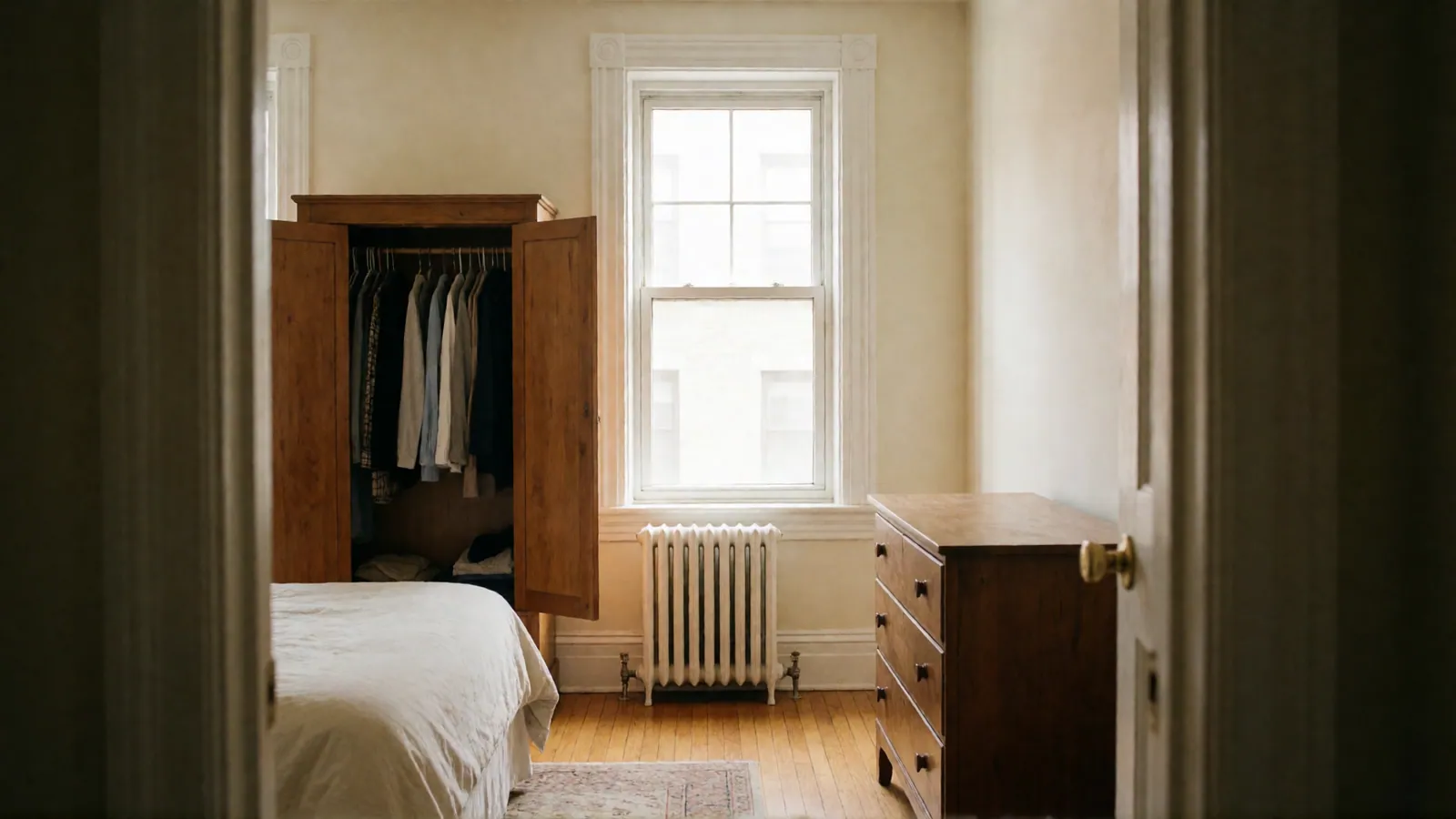
A prewar bedroom seen through its doorway before anything is packed: a wooden wardrobe with its doors open on hanging clothes, a made bed, a wooden chest of drawers, a rug and a white radiator under a double-hung window.

How it works

The survey, by video or at your home

What the surveyor looks at, how to get ready for it, and what follows it: a written estimate, and a date.

AI-generated illustration. Not a real home or business.

What the survey is for

Every move is surveyed before it is booked. Most surveys are a video call: you walk through the rooms with your phone, open the closets and show us the stairs, and it takes about twenty minutes. A survey at your home is there if you'd rather, and for a house or an office we usually suggest one.

Priya Ramaswamy-Hale, who runs the video surveys and writes the estimates that follow a video survey, asks you to open every closet on the call, because closets are where moves run long. Priya counts boxes from the shelves, a shelf at a time.

Ines Okafor-Brandt, who runs the company and does the surveys at home, measures the stairwell before she looks at the sofa. A sofa that fits the new room may not fit the turn on the landing, and the stairwell is the one thing nobody can change on the day.

By video, or at your home

A video call: you walk us through the rooms with your phone

Priya runs these. Hold the phone at chest height and walk slowly; open every closet and cabinet, point the camera down the stairs from the top, and step outside to show where a truck could stop. It suits most apartments, and it is the survey most moves get.

A visit to the home

Ines does these herself. It is the one to choose for a house or an office, and the one that can lead to a written binding estimate. An order for service signed at your home after it comes with three business days to cancel.

Getting ready

A few minutes of this lets the surveyor see the whole home, and answers the questions they would otherwise have to ask.

Before the survey

  1. Open every closet and cabinet on the call, and the basement or the storage cage if you have one.

  2. Show us the stairs from the street, the elevator and its door, and where a truck could stop.

  3. Point out what is not coming: what you are selling, giving away or leaving behind.

  4. Measure the widest sofa and the tallest wardrobe, and the narrowest door they must pass.

  5. Have both addresses and both buildings' moving rules to hand, if you know them.

After a survey at home: three business days

A right the law gives you. If you sign the order for service at your home, after a survey there, you can cancel it until midnight of the third business day after, owing nothing: tell us by e-mail or letter before that midnight. So after a survey at home, the earliest move date is the first day a move runs after those three business days.

Counting the three days. A business day is every day except Sunday and the federal holidays.

Three days to cancel

The date

A preferred date may be from four days ahead, or later after a survey at home, to 180 days ahead, on any day a move runs. It is a wish, not a reservation: the survey and the order for service fix the date.

What comes after it

After the survey you get a written estimate: the crew, the truck, the hours we expect, the rates, the boxes, the travel time and anything special. It is a prediction, signed by both of us, and the rates in force on the day govern the final charges. After a survey at your home you may ask instead for a written binding estimate: one total, good for thirty days, which changes only if what moves changes.

How estimates work

Plan your move

Try the move planner: a crew, a truck and a range of hours at the published rate, in about two minutes. Sending it to us books nothing.